


MSc Data & AI for Quantitative and Corporate Finance
A two-year, English-taught Master of Science in Geneva, sponsored by Edmond de Rothschild. A common first semester, then a specialization in Financial Markets or Corporate Finance, with data and AI throughout.
or Corporate Finance
100% taught in English
Our partners




Choose your track: Financial Markets or Corporate Finance
Semester 1 is common to all students: markets, corporate finance and the data foundations. From Semester 2, you specialize. Click a track to adapt the program and the careers below, or keep both on screen.
Financial Markets
For whom
Candidates aiming at a career as a trader, structurer, quantitative analyst or portfolio manager, who like working with numbers, models and market data, and making decisions quickly.
Program overview
- Pricing the markets. Fixed income and derivatives in the shared core, then structured products and commodity trading.
- Algorithmic trading. Machine learning and AI to design and test trading strategies.
- Asset management. Building portfolios and managing financial risk, from fixed income to wealth management.
- Data science at the core. Python, time series forecasting and machine learning applied to market data, from the first semester to systems in production.
Careers it opens
- Trader, structurer, quantitative analyst
- Risk analyst, commodity trader
- Data scientist in a markets team
Employers include investment banks, hedge funds, asset managers, family offices and commodity trading houses.
Corporate Finance
For whom
Candidates aiming at a career in investment banking, private equity or corporate finance, who want to value companies, structure deals and advise executives, and who are comfortable building a financial case with models and data.
Program overview
- Valuing companies. From healthy to distressed businesses, with capital structure and financing decisions.
- Mergers and acquisitions (M&A) and private equity. Advising on acquisitions, then LBO modelling and buyouts in the final semester.
- Capital markets. Equity and debt issuance (ECM/DCM).
- Data analysis at the core. Financial planning and analysis, audit analytics and machine learning applied to business decisions.
Careers it opens
- Investment banking analyst, mergers and acquisitions advisor
- Private equity analyst, asset finance
- Corporate finance and FP&A analyst
Employers include investment banks, advisory boutiques, private equity funds and large corporates.
I'm not sure yet, I'm still exploring options
You can still start your application. As you build it, book an appointment with our admissions team: they will help you choose the track that fits your career goals.
Program overview →The program in four steps
A shared first semester gives everyone the same foundations in markets, corporate finance and data. From Semester 2, students specialize in Financial Markets or Corporate Finance, with data and AI applied to each.
- 01
Semester 1, the shared core
FinanceFoundations in markets and corporate finance, whatever your track.
Fixed Income & Rates Markets · Derivatives: Foundations & Pricing · Corporate Financial Analysis & Value Creation
Data & AIPython, SQL and statistics from day one, at the level that fits your background: Entry, Intermediate or Advanced.
- 02
Semester 2, specialize
FinanceFinancial MarketsCommodity Trading · AI for Algorithmic Trading · Structured Products & Pricing Strategies
Corporate FinanceM&A Advisory · Business Valuation: From Mature to Distressed · Capital Structure & Financing Decisions
Data & AI, both tracksMachine learning put to work on financial data: time series forecasting, language models, and MLOps to take a model into production.
- 03
Internship
A 3 to 9-month end-of-study internship in the first semester of the second year, in Geneva or in another finance hub.
Internships let students apply data and AI inside a finance team, in areas like process automation in wealth management, data and AI for commodities trading, credit risk modelling, quantitative research or algorithmic trading.
- 04
Semester 4, go deeper
FinanceFinancial MarketsPortfolio Management and Quantitative Strategies · Sustainable & Impact Investing · Blockchain & Decentralised Finance
Corporate FinanceLBO Modelling & Private Equity · ECM/DCM Fundamentals · Asset Finance: Infrastructure, Real Estate & Private Assets
Data & AI, both tracksAI for Finance: From Signal to System · AI systems at scale and cloud computing · causal inference and applied econometrics.
Data & AI, applied to finance
Algorithmic trading
Machine learning to build and test trading strategies.
Forecasting
Time series models for markets and company financials.
Financial planning and audit
Data analytics to plan, control and value a company.
Models in production
MLOps and cloud engineering to deploy what has been built.
Curriculum: valuation, M&A, derivatives, algorithmic trading and AI
The curriculum starts from the jobs you are aiming for. It is organized in five domains, each one a skill set that finance teams hire for: valuing a business, closing a deal, trading a market, pricing risk, and building with data and AI. Data and AI run through all of them, from your first Python class to models running in production.
Sponsored by:
01 Valuation and corporate finance
Corporate Financial Analysis & Value Creation · Business Valuation: From Mature to Distressed · Capital Structure & Financing Decisions · Data for Financial Planning & Analysis · Data Analytics for Business Audit · Wealth Management & Family Office
02 Investment: mergers and acquisitions, private equity and capital markets
M&A Advisory · LBO Modelling & Private Equity · ECM/DCM Fundamentals · Asset Finance: Infrastructure, Real Estate & Private Assets
03 Markets: fixed income, trading and digital assets
Fixed Income & Rates Markets · Commodity Trading · AI for Algorithmic Trading · Blockchain, Crypto & Decentralised Finance · Corporate Entrepreneurship & Innovation Finance
04 Risk management and derivatives
Derivatives: Foundations & Pricing · Structured Products & Pricing Strategies · Financial Risk Management: Corporate & Institutional
05 Data and AI
Python Fundamentals & Development Environment · SQL, Data Querying & Business Dashboards · Applied ML: Foundations, Engineering & Evaluation · Time Series Analysis & Forecasting · Generative AI · MLOps & Model Deployment · Data Engineering & Cloud Infrastructure · Causal Inference & Experimental Methods · Applied NLP: From fine-tuning to production · AI for Finance
Data courses run at three levels (Entry, Intermediate, Advanced), so you start where your background puts you.
Business Deep Dives: where theory meets practice
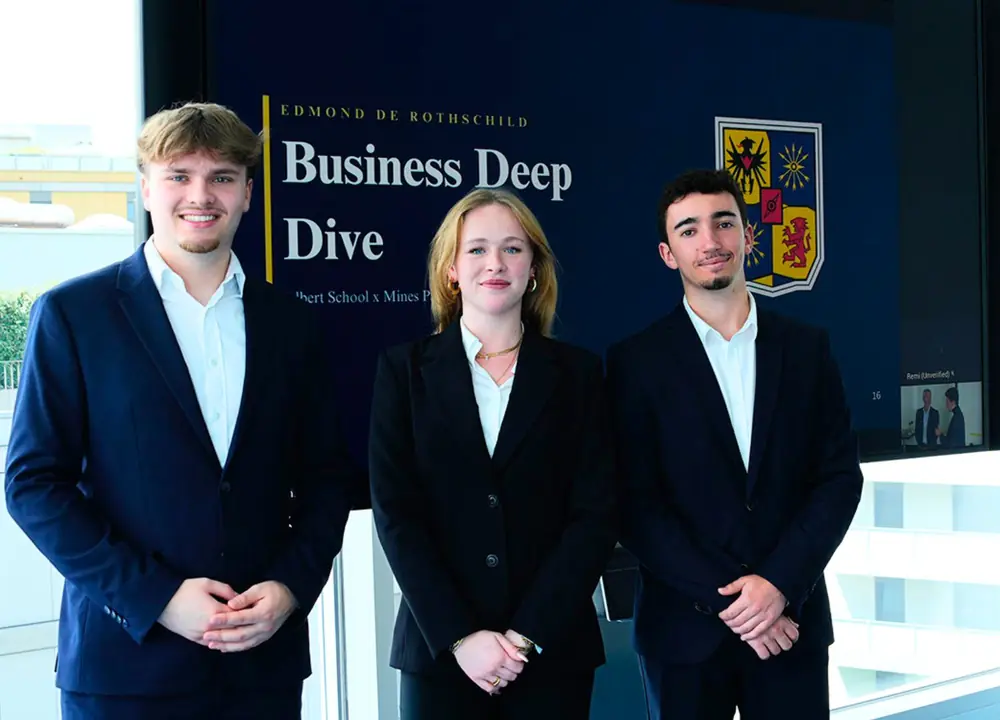
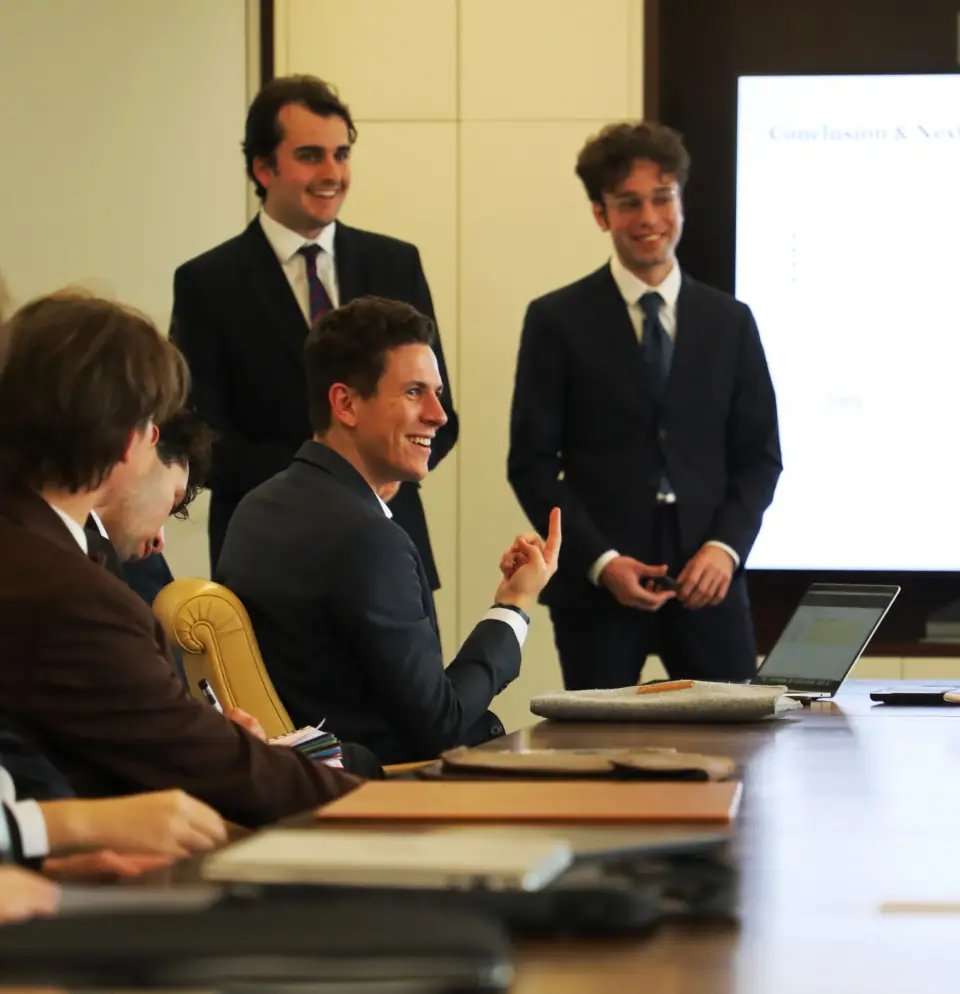
A Business Deep Dive (BDD) is a real project brought by a partner company. Every three weeks, the partner's executive team shares a live financial problem and its data. Student teams work on it, then present their analysis and recommendations to that same executive team.
- 01
The brief. A partner company shares a real problem and the data behind it.
- 02
The work. Your team analyzes the data and prepares a recommendation.
- 03
The pitch. You present to the executives who brought the case, and answer their questions.
- Test the theory. What you learn in class is tested on a real company's data, not on a textbook case.
- Build a network. You meet finance professionals while you study, not only after you graduate.
- Unlock opportunities. BDDs help students build a network and open doors to internships and jobs.

Study finance in Geneva, one of the world's leading financial centers
Private banking and asset management
Pictet, Lombard Odier, Edmond de Rothschild, Union Bancaire Privée, Mirabaud.
Commodity trading
One of the world's major trading hubs, with Mercuria, Vitol, Gunvor and Trafigura running large trading operations from the city.
International organizations
The United Nations, the World Trade Organization, the World Health Organization, the International Labor Organization and the World Intellectual Property Organization.
Geneva brings together private banking, asset management and commodity trading. Pictet, Lombard Odier, Edmond de Rothschild and Union Bancaire Privée are based here, alongside UBS, BNP Paribas, Société Générale and Crédit Agricole Indosuez.
Geneva is also a place to live well. It is safe, compact and international, with Lake Léman in the middle of the city and the Alps and the Jura within reach: swimming and boating in summer, ski resorts about an hour away in winter. It is regularly ranked among the most livable cities in the world.
Discover the Geneva campus →



Internships to launch your career in finance
Every student does a 3 to 9-month internship. Students work in very different areas of finance, from private equity to credit risk to AI. Placements can be in Geneva or in other global finance hubs, such as London, New York or Singapore.

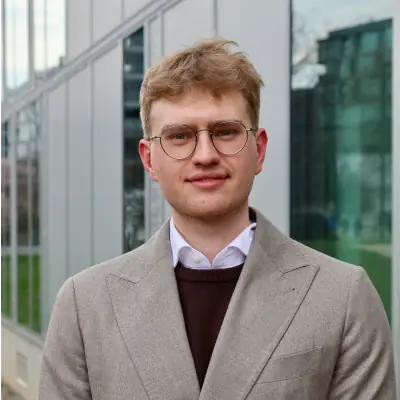

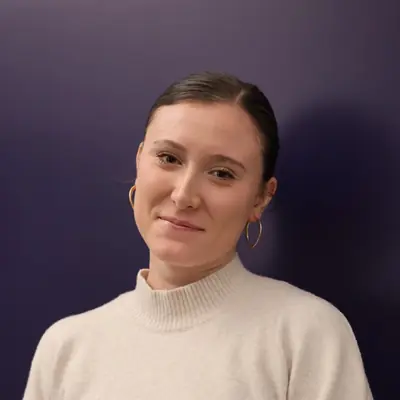










"During my studies at Albert School I was offered an internship at Pictet in Geneva as a Generative AI engineer. The school prepares us to go through a demanding recruitment process and pushes us to be ambitious right from the first work experiences."

Careers in investment banking, private equity, trading and risk
secured a job before finishing the program. 2026 data, across all Albert School finance programs.
Here are the paths our students aim for, the track that leads there, and the courses that prepare for them.
Corporate FinanceInvestment banking and mergers and acquisitions
M&A Advisory · Business Valuation: From Mature to Distressed · Capital Structure & Financing Decisions · ECM/DCM Fundamentals
Corporate FinancePrivate equity and asset finance
LBO Modelling & Private Equity · Asset Finance: Infrastructure, Real Estate & Private Assets · Corporate Entrepreneurship & Innovation Finance
Corporate FinanceCorporate finance and FP&A
Corporate Financial Analysis & Value Creation · Data for Financial Planning & Analysis · Data Analytics for Business Audit
Financial MarketsTrading and structuring
Derivatives: Foundations & Pricing · Structured Products & Pricing Strategies · Fixed Income & Rates Markets
Financial MarketsQuantitative analysis and algorithmic trading
AI for Algorithmic Trading · Time Series Analysis & Forecasting · Reinforcement Learning · AI for Finance: From Signal to System
Financial MarketsCommodity trading
Commodity Trading · Fixed Income & Rates Markets · Time Series Analysis & Forecasting
Both tracksRisk management
Financial Risk Management: Corporate & Institutional · Derivatives: Foundations & Pricing · Applied Statistics & Econometrics for Business
Both tracksWealth and asset management
Wealth Management & Family Office · Asset Finance: Infrastructure, Real Estate & Private Assets
Both tracksData science and AI in finance
MLOps & Model Deployment · Generative AI I and II · Applied NLP: From Fine-Tuning to Production · Data Engineering & Cloud Infrastructure
Typical starting salaries in finance
Gross annual base salary, junior roles in Switzerland. Indicative ranges from salary surveys (2023–2026 data).
A community built around finance
At Albert School, finance goes beyond the classroom. Students have built communities around it, and the school supports and promotes their initiatives.
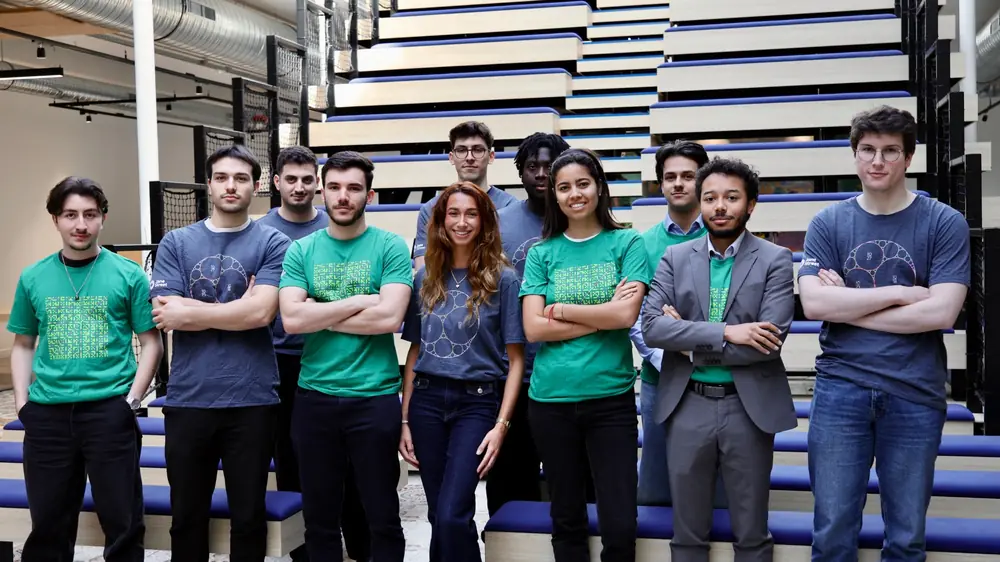
Albert Quant Trading Club
Bachelor and Master students who share an interest in market finance, algorithmic trading and quantitative research. The club organizes interview preparation, recruiter sessions and trading simulations. Its first simulation, run with AmplifyME and Morgan Stanley, brought together 139 students, and the club has a partnership with Jane Street.



Albert Capital
A market finance and investment association, created by Fadi Hassan on the Geneva campus.
A joint degree with Mines Paris – PSL
Mines Paris – PSL is one of France's oldest engineering schools, and a founding member of Université PSL, ranked #1 in France and #34 in the world in the QS World University Rankings 2027. You graduate with a degree issued jointly by Mines Paris – PSL and Albert School.
Joint degree, Mines Paris – PSL / Albert School
A Master (Bac+5) in data science and management, built to answer the technological and economic challenges businesses face, with a focus on digital transformation.
Master grade
By decree of March 3, 2026, published in the Journal officiel on April 12, 2026, Mines Paris – PSL, in partnership with Albert School, is authorized to award the Master grade to its Master of Science. Awarded by the Ministry of Higher Education and Research, it extends national recognition of the partnership to graduate level.

Supported by key leaders in the finance industry
"Today, even in finance, knowing Python might be more valuable than having a degree in financial mathematics. Data is a key asset for business, and those who combine expertise in both business and data will be the winners of tomorrow."


Sponsored by Ariane de Rothschild
Ariane de Rothschild, CEO of Edmond de Rothschild, sponsors the MSc Data & AI for Quantitative and Corporate Finance. Edmond de Rothschild also works with the program on Business Deep Dives, and Master students have interned within the group.
"The difference between real life and what is learned at university is enormous, and it has been accelerated by digitalization. I find that Albert School precisely addresses what a university should do today: preparing students and equipping them to truly enter professional life."
Three steps to join the program
You need a Bachelor's or a Master's degree to apply. Your transcripts matter, but the interview is where we see how you think, beyond what you have studied.
Upload your transcripts, resume and motivation letter.
GMAT, TAGE MAGE, CFA and other documents are optional but highly encouraged.
An assessment of your fit with the program and your motivation, followed by a brainteaser that tests your analytical and reasoning skills under pressure.
Tuition & Financing
See the full cost of the program, and the payment plans or financing options that can help cover it.
View fees →Frequently asked questions — MSc Data & AI for Quantitative and Corporate Finance
What are the career outcomes of the MSc Data & AI for Quantitative and Corporate Finance?
94% of our students secure a job before they finish the program. Graduates pursue careers in investment banking and M&A, private equity, trading and structuring, quantitative analysis, risk management, asset and wealth management, and data and AI roles inside financial institutions.
What are the two tracks of the MSc Data & AI for Quantitative and Corporate Finance?
Semester 1 is common to all students. From Semester 2, students choose the Financial Markets or the Corporate Finance track. Specialization courses run in small groups, with industry speakers.
How do I choose between Financial Markets and Corporate Finance?
Choose Corporate Finance for M&A, LBO, private equity and ECM/DCM, with courses such as M&A Advisory, Business Valuation: From Mature to Distressed and LBO Modelling & Private Equity. Choose Financial Markets for trading, structuring and quantitative roles, with courses such as Commodity Trading, Structured Products & Pricing Strategies and AI for Algorithmic Trading. If you are not sure yet, Semester 1 is the same for everyone — you can apply now and decide with our admissions team.
Does the program cover mergers and acquisitions (M&A) and private equity?
Yes. Corporate Financial Analysis & Value Creation is in the common core. The Corporate Finance track adds M&A Advisory (30h) and Business Valuation: From Mature to Distressed (30h) in Semester 2, then LBO Modelling & Private Equity (24h) and ECM/DCM Fundamentals in Semester 4.
Does it cover quantitative finance and algorithmic trading?
Yes. Fixed Income & Rates Markets and Derivatives: Foundations & Pricing are in the common core. The Financial Markets track adds Commodity Trading, Structured Products & Pricing Strategies and AI for Algorithmic Trading, alongside machine learning, time series analysis and Python. Students can also join the Albert Quant Trading Club.
Does the program include an internship?
Yes. Semester 3 is a 3 to 9-month end-of-study internship (30 ECTS). Placements can be in Geneva or in other finance hubs such as London, New York or Singapore. Examples from our Master students: private equity at B3 Partners, investor relations at Naxicap Partners, credit risk modelling at UniCredit, and AI & data at Edmond de Rothschild Systemic Regeneration.
Why study finance in Geneva?
Geneva is one of the world's leading financial centers. Our teachers work in renowned institutions, students work on Business Deep Dives with real financial issues, and the city ranks among the best in the world for quality of life.
How international is the cohort?
In Geneva, the cohort brings together more than 13 nationalities, from Switzerland, France, Spain and Italy to Morocco, Ukraine, the United States, Argentina, Iran and the UAE. Every course is taught in English.
What is the difference between the full-time MSc and the apprenticeship format?
The full-time format has more teaching hours, so students go deeper and have a wider choice of classes. It also gives access to selective summer internships, and prepares profiles sought in investment banking, trading and private equity. The apprenticeship format suits students who want to alternate between school and a company.
What is a Business Deep Dive?
A real project brought by a partner company. Student teams work on its data, then present their recommendations to the executives who set the case. It is where class concepts meet practice, and where students start building a network that can lead to internships and jobs.
Which companies work with the program on Business Deep Dives?
In Geneva, Edmond de Rothschild, Crédit Agricole Indosuez and SwissBorg, among others. Albert School also works with banks and financial institutions across its other campuses, including Pictet, BNP Paribas and Société Générale.
Is the degree recognized?
Yes. The MSc is a joint degree of Mines Paris – PSL and Albert School, and it is accredited. By decree of March 3, 2026, published in the Journal officiel on April 12, 2026, Mines Paris – PSL is authorized to award the Master grade (grade de Master) to this Master of Science, which is conferred by the French Ministry of Higher Education and Research.
Is the program taught in English?
Yes. Every course is taught in English, by an international faculty of practitioners, and the cohort is international too.
Who teaches in the MSc?
Teachers come from the corporate world. More than 50 practitioners teach in Geneva, and all of them hold a professional position alongside their teaching, so theory arrives straight from industry experience. For example:
- Valery Varin, data teacher and Business Deep Dive coordinator: former Head of Data and AI at Uber and Head of Africa at Twitter, MBA from HEC Paris.
- Laure Petiteau, Bachelor strategy teacher: over 20 years as a senior finance executive at Procter & Gamble, Master from ESCP Business School.
- Deia Markova, asset finance teacher: former Head of Trade and Sustainable Commodity Finance at Société Générale, University of St. Gallen.
- Benjamin Forestier, M&A teacher: lecturer at École Polytechnique, HEC Paris and ESSEC.
Other finance teachers currently work at Edmond de Rothschild Asset Management, Mercuria, Citi Private Bank and BCGE. Meet our faculty →