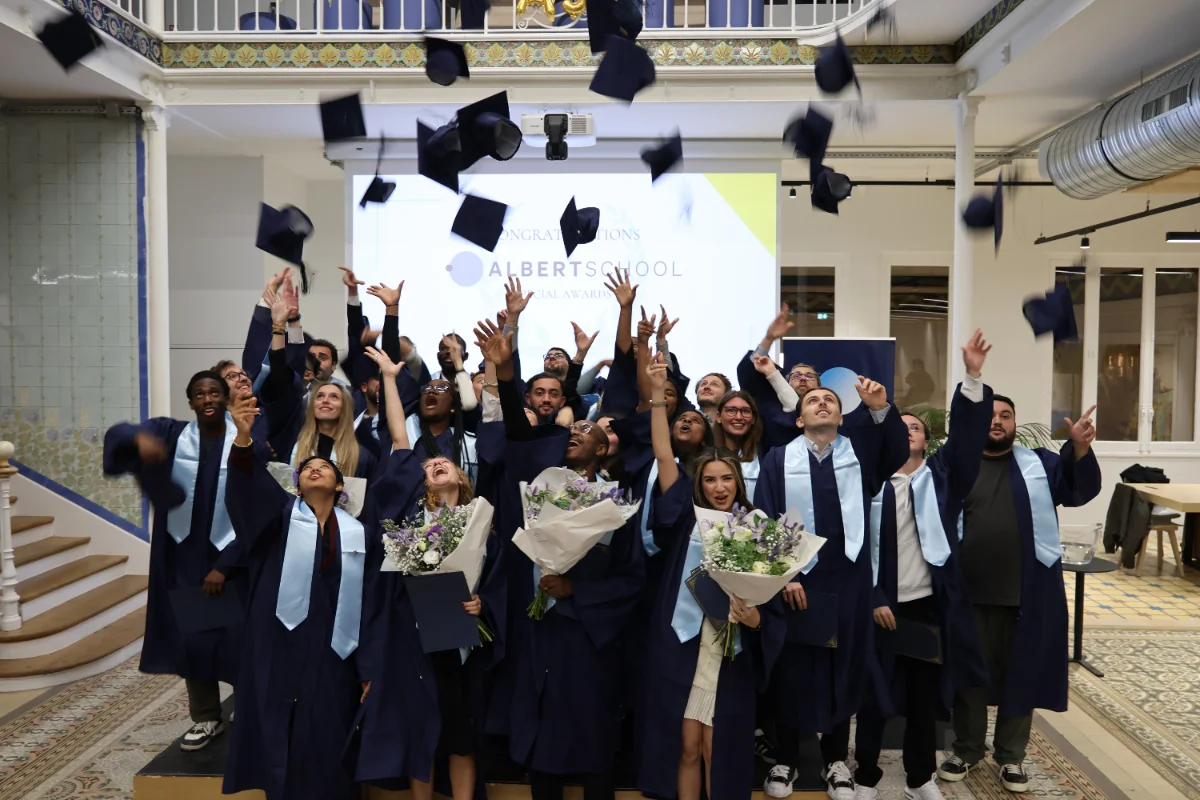
Reinventing learning in the age of AI
Students entering higher education today are the first who cannot inherit the path of those before them. The way people learn, the skills employers pay for and the careers that seemed safe five years ago are all moving at once, in the same direction: toward the machine.
The tasks that used to be the first rung of the ladder, analyses, syntheses, models, decks, are exactly what AI does best. What employers still buy, and will pay more for, is what the machine does not deliver: someone who knows what matters, what is true, what is missing, and who owns the decision.
That is the profile Albert School trains.
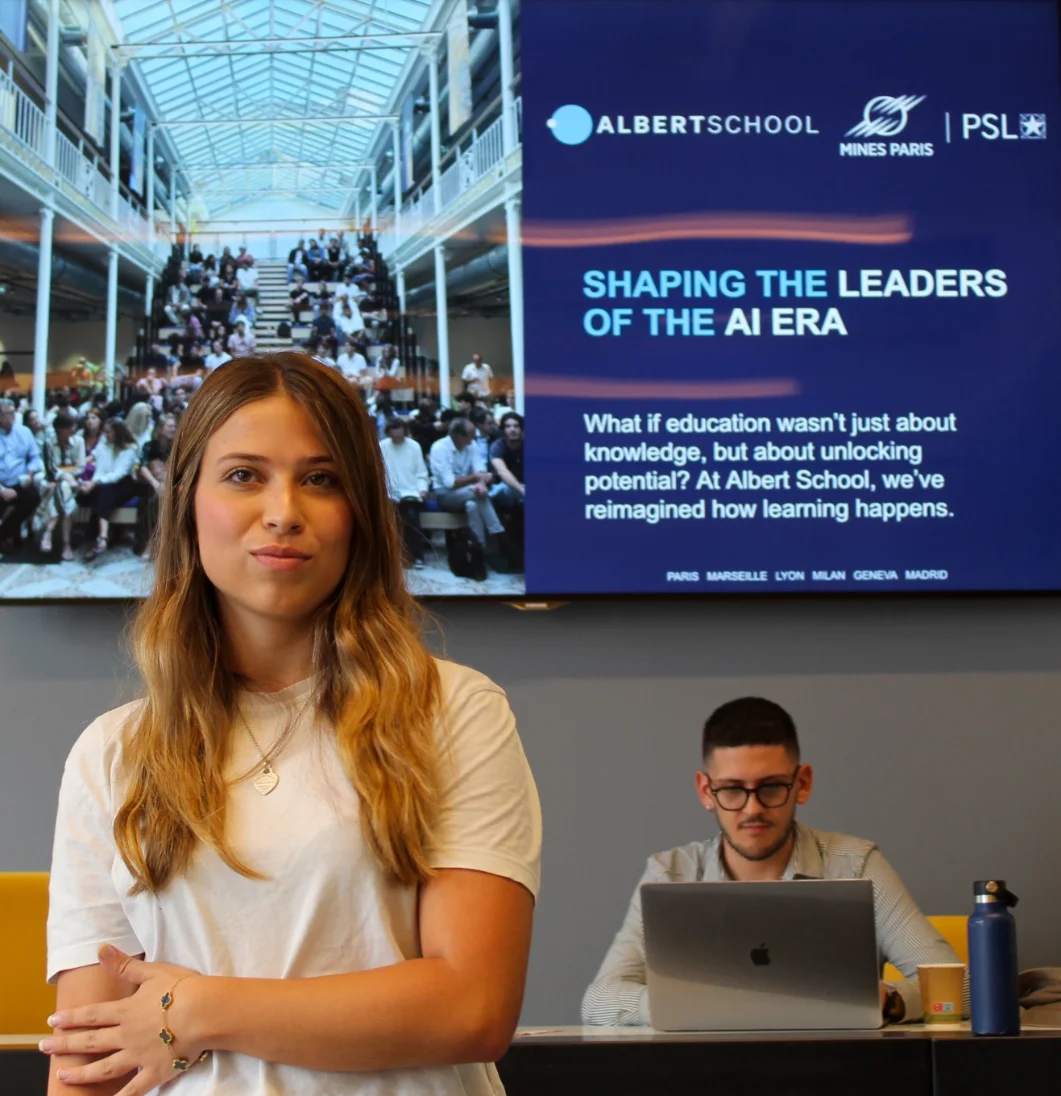
Designed against cognitive surrender
In August 2026, MIT published its committee report on AI in education. The most technophile institution in the world described what was happening on its own campus: study groups emptying, office hours deserted, students who stopped asking how to solve a problem and started asking how to get it solved.
The authors named the reflex: cognitive surrender, turning to the machine at the first sign of difficulty. Their conclusion is one every student should copy onto the first page of their notebook: the most important product of an education is not a grade or a diploma. It is the student, their judgment, their rigour, their capacity to think.
Albert School was born a few weeks before ChatGPT. Every format we teach in was designed with this failure mode in view.
Three disciplines, held together
Each one protects against the excesses of the other two.
Ambition
AI puts in the hands of a twenty-year-old capabilities no generation has had: build in a semester what took a team and a year, interrogate any field, prototype any idea. Those who master these tools are no longer bound by the pace of a classroom. Aim higher than reasonable.
Humility
Because AI produces impressive results without effort, it manufactures a dangerous illusion: the feeling of having understood, when the machine understood for you. Generating a financial model is not mastering the assumptions that break it. Shipping code you could not debug alone is not knowing how to program.
Vigilance
Every time a student lets AI think for them, they may get the grade; they certainly lose the progress. Laziness is not new. What is new is that no generation has had it this convenient, this instant, this invisible. Resisting it starts in first year, not after graduation.
An explicit pact
Being “AI-native” guarantees nothing at the speed models move. A school that preaches boldness to its students while its teaching formats remain those of 2021 manufactures a contradiction students see perfectly. So the pact is written down. Neither commitment holds without the other.
Staying at the frontier, whatever it costs in reinvention
- Curricula rebuilt every year, from Python and SQL in Bachelor to deep learning, MLOps and LLM architectures in Master.
- The tools industry uses now, taught the way industry uses them.
- Real problems from partner companies, defended in front of practitioners.
- Learning that adapts to each student: deeper pathways for those who move fast, early intervention for those who need support.
Doing the work
- Disclose. AI use is always made explicit. If a model contributed to an analysis or a decision, its role is named and can be examined.
- Verify. Every output is questioned, not trusted. Fluent and confident are not the same as correct.
- Own. Whoever produces the result is responsible for it. “The AI said so” is not a defense, in graded work or in professional life.
The first thing we teach is understanding, not use.
Anyone can prompt a language model. What distinguishes people who will build, lead, and audit AI systems is harder: knowing how these tools work, where they fail, and why.
Students start from scratch: Python, SQL, algorithms, software engineering. By year three, they build and evaluate machine learning models end to end. By year four, they work with the architectures behind the most advanced AI systems. In the final year, the Albertnative Project takes it to production: a real product built on Google Cloud, from problem statement to investor pitch.
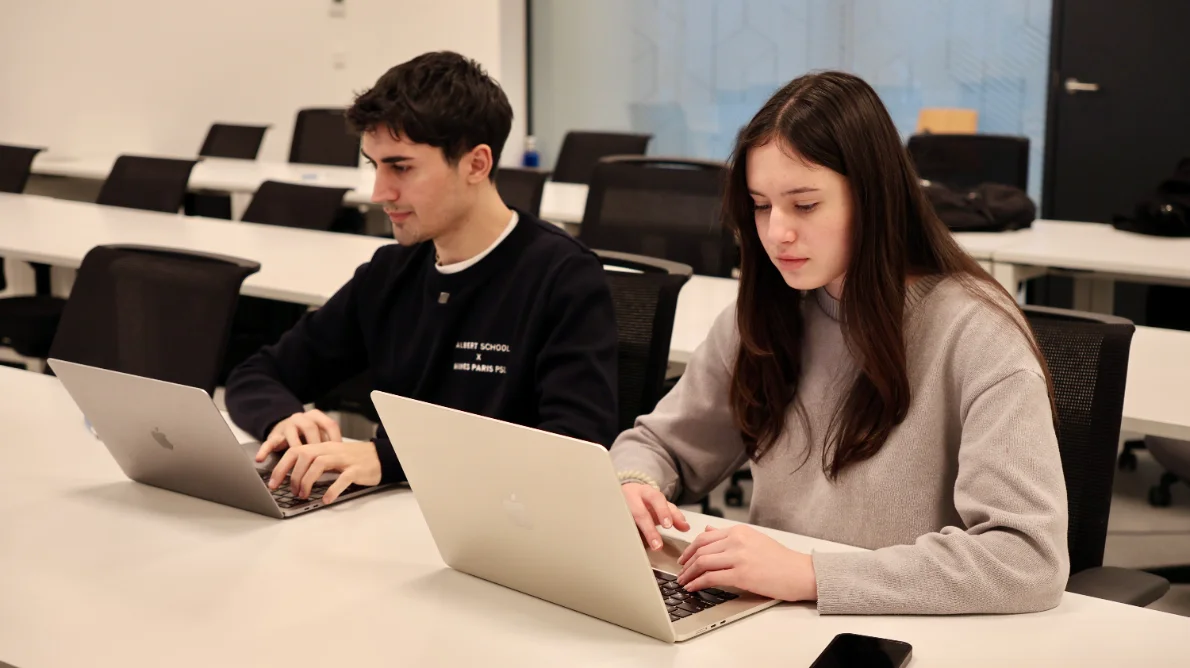
The Bachelor learning journey · S1 to S6 Hide the path Unfold the path
Data, Python, Pandas, SQL, algorithms, and software engineering. Learning to read data before touching a model.
A first placement after just one year, earlier than most programs. Students see how companies actually use (and misuse) AI in practice, before returning to go deeper.
Machine learning from the ground up: supervised and unsupervised models, APIs and pipelines. Closes with prompt engineering and a first rigorous encounter with LLMs.
A second placement, this time with two years of technical depth to take on more serious work and more to observe.
Back from internship with a sharper eye: neural networks, computer vision, feature engineering, and a principled introduction to generative AI.
The Master learning journey · S7 to S10 Hide the path Unfold the path
The hardest semester, intentionally. Deep learning, generative AI, reinforcement learning, and the mathematics of modern machine learning, taught from first principles.
A second placement, this time with the technical depth to take on more serious work and more to observe.
MLOps, data engineering, cloud computing, NLP, and operating AI at scale. Closes with the Albertnative Project: a real product built end to end on Google Cloud.
A final professional placement or independent project, applying everything at full depth in a real organizational context.
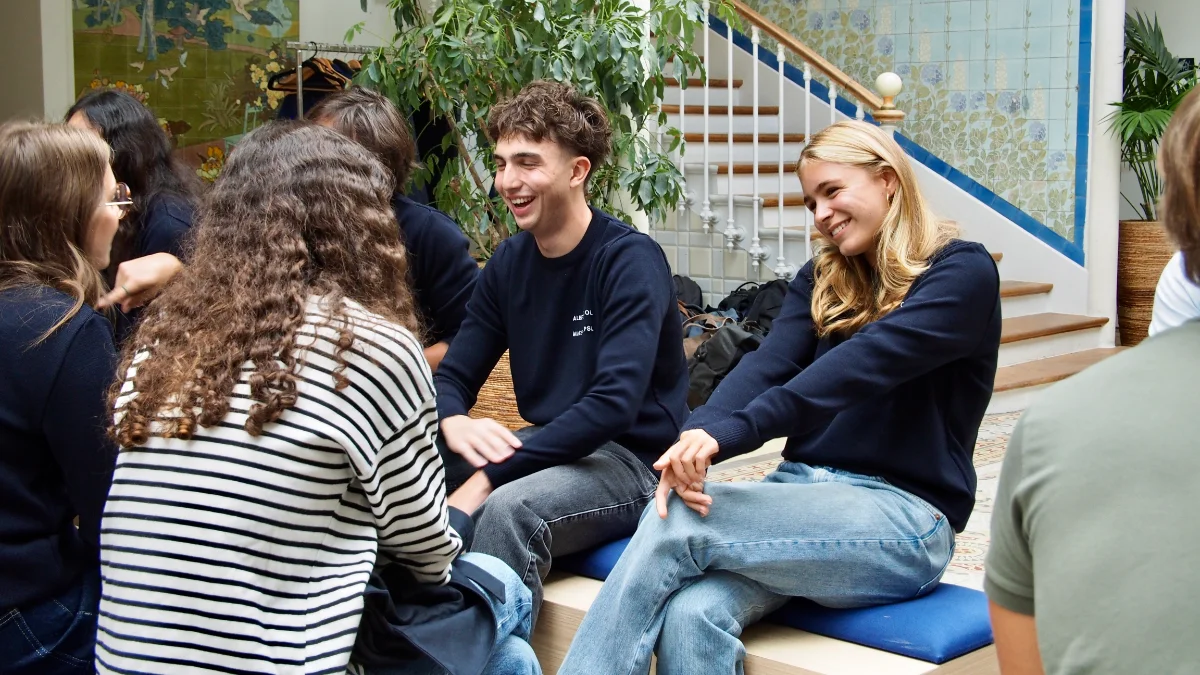
The more capable machines become, the more the human part is worth
A model writes a strategy; it does not look people in the eye to make them want to execute it. Emotional intelligence, the ability to bring a team together, to earn its trust: these are not learned alone in front of a screen.
They are built inside a cohort, over years, in projects that fail before they succeed and disagreements that have to be resolved in person. That is why Albert School is a campus in Paris, Marseille, Milan, Geneva and Madrid, not a platform.
This generation will not inherit a map. That is a real loss, and I do not minimize it. But those who learn to navigate without a map end up drawing the maps for others. That is exactly the job the world is about to hand them.
Discovering AI as early as high school
Understanding what AI can do should not wait until higher education. Through our AI Discovery Days, high school students explore real applications across the industries shaping the world: trading data in finance, brand strategy for a luxury house, performance models in sport. Each session is hands-on: real datasets, professional tools, findings presented to a room. No prior experience required.